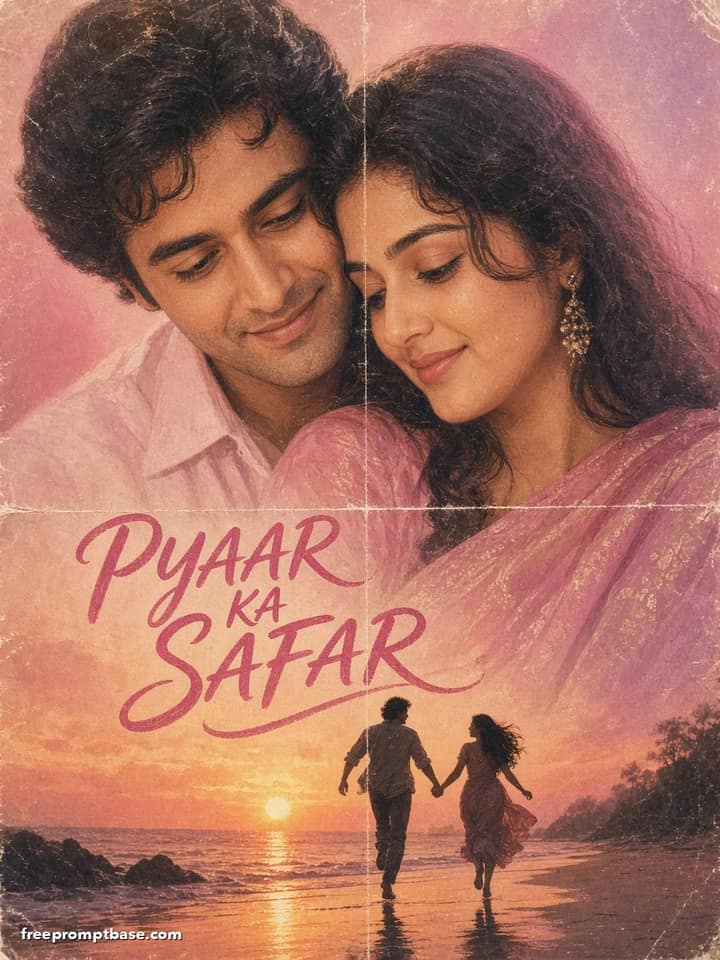
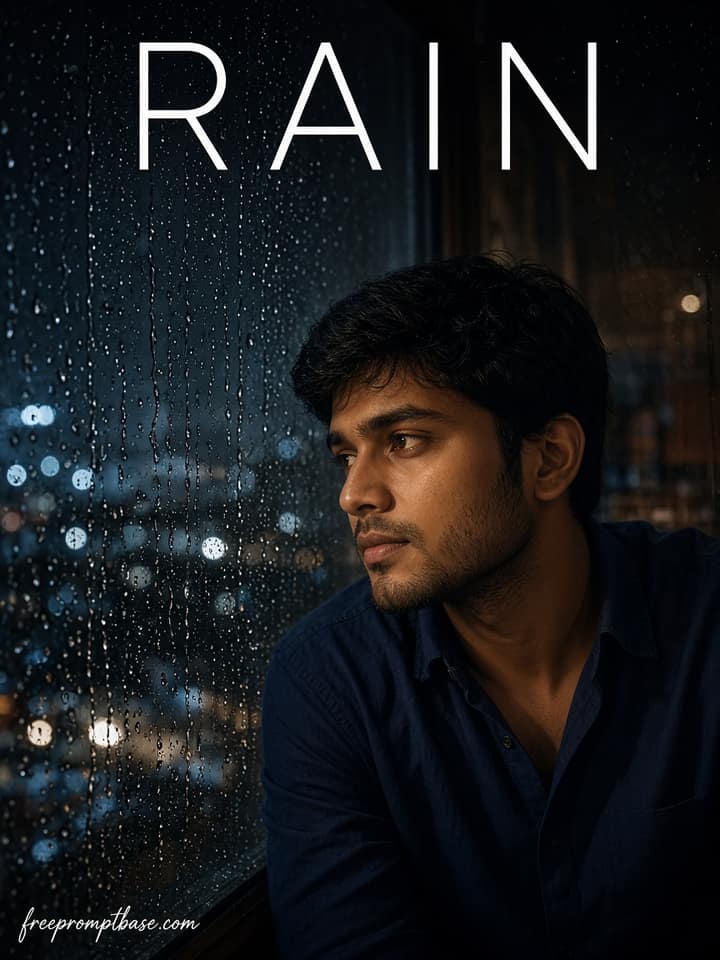
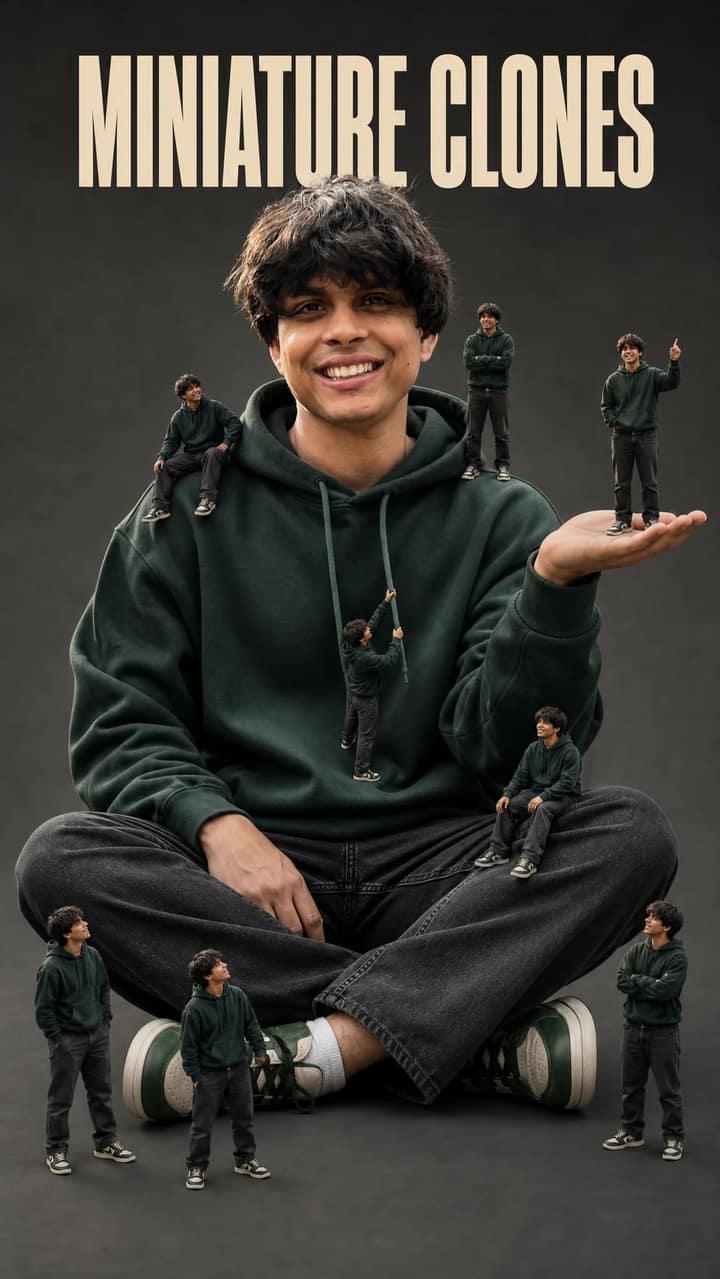
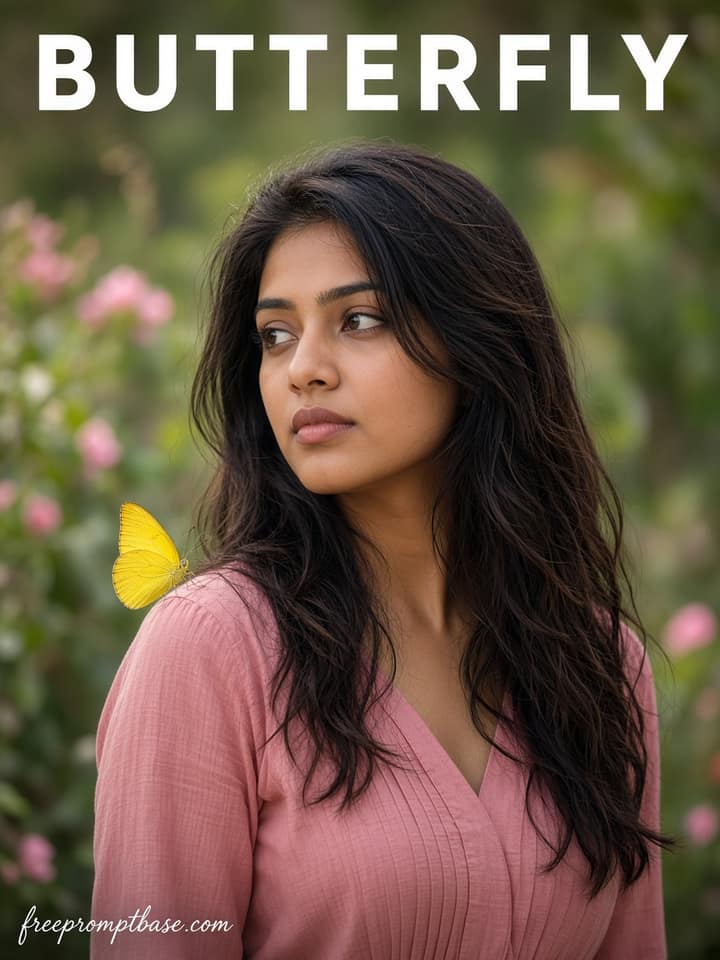
AI image prompts are the text you type to make a model generate a picture. Every good one answers five questions: what is the subject, what style, what light, how is it framed, and what medium should it look like. Answer those in one or two sentences and almost any tool, Gemini, ChatGPT, or Midjourney, will give you something usable on the first try.
This page gives you the formula once, then ready-made prompts you can copy and bend to your own idea.
The five-part formula
- Subject. One clear noun with one or two details. 'An elderly fisherman with weathered hands' beats 'a man'.
- Style. Photorealistic, watercolor, 3D render, anime, film still. This single word moves the result more than any other.
- Light. Golden hour, single window light, neon signs, overcast. If you skip it, you get flat, even lighting, which is the least interesting choice.
- Framing. Close-up portrait, wide shot, low angle, centered symmetry.
- Medium. Shot on 35mm film, oil on canvas, clay model, studio photograph. This ties everything together.
A one-line template to keep: subject + style + light + framing + medium. 'A street food vendor at night, photorealistic, lit by his own stall's warm bulbs, close-up, shot on 35mm film.'
AI image prompts to copy
| Type | Paste this |
|---|
| Portrait | 'Close-up portrait of a young woman in a mustard-yellow sweater, soft window light from the left, shallow depth of field, shot on 85mm lens, natural skin texture.' |
| Cinematic scene | 'A lone cyclist crossing an empty bridge at dawn, thick fog, cold blue light with one warm streetlamp, wide shot, film still look.' |
| Product shot | 'A glass perfume bottle on wet black stone, single hard spotlight, dark background, macro detail, high-end studio photograph.' |
| Fantasy art | 'A floating library above the clouds at sunset, golden light through the shelves, wide angle, detailed digital painting.' |
| Minimal wallpaper | 'A single green leaf on an off-white background, soft even light, centered, lots of negative space, minimalist photograph.' |
| Food | 'A bowl of steaming ramen on a worn wooden counter, warm side light, steam visible, overhead angle, editorial food photography.' |
Advertisement
Editing your own photo instead of generating one
If you are starting from a photo of yourself rather than a blank canvas, the formula changes: the keep line becomes the most important part. That is a different craft, covered on our photo editing prompt page, with tool-specific versions for Gemini and ChatGPT.
Small changes with outsized effects
- Swap the light and keep everything else. 'Golden hour' to 'overcast' turns the same scene from warm to melancholy.
- Name a lens. '85mm' compresses and flatters portraits; '24mm wide' adds drama to rooms and streets.
- Give it a color palette: 'muted earth tones' or 'teal and orange' steers the whole grade.
- Cut adjectives that do no work. 'Ultra mega hyper detailed 8k masterpiece' adds noise, not quality. One or two rendering cues are plenty.
Why the same prompt gives different pictures
Image models sample from probabilities, so two runs of one prompt never match exactly. That is a feature. Run a good prompt three or four times, pick the best, and refine from there. If results vary too wildly, your prompt is under-specified: add a framing or light instruction, and the spread tightens.
Tool notes
Gemini follows plain-English prompts closely and is strong with faces from uploaded photos. ChatGPT is best when you want to iterate conversationally. Midjourney leans beautiful-but-liberal: it will improve on your idea whether you asked or not, which is great for art and risky for accuracy. The formula above works in all three; only the dial settings differ.